
Da Alfredo Binda nel 1902…
Nella piccola Cittiglio il ciclismo scrive la sua storia da più di 100 anni
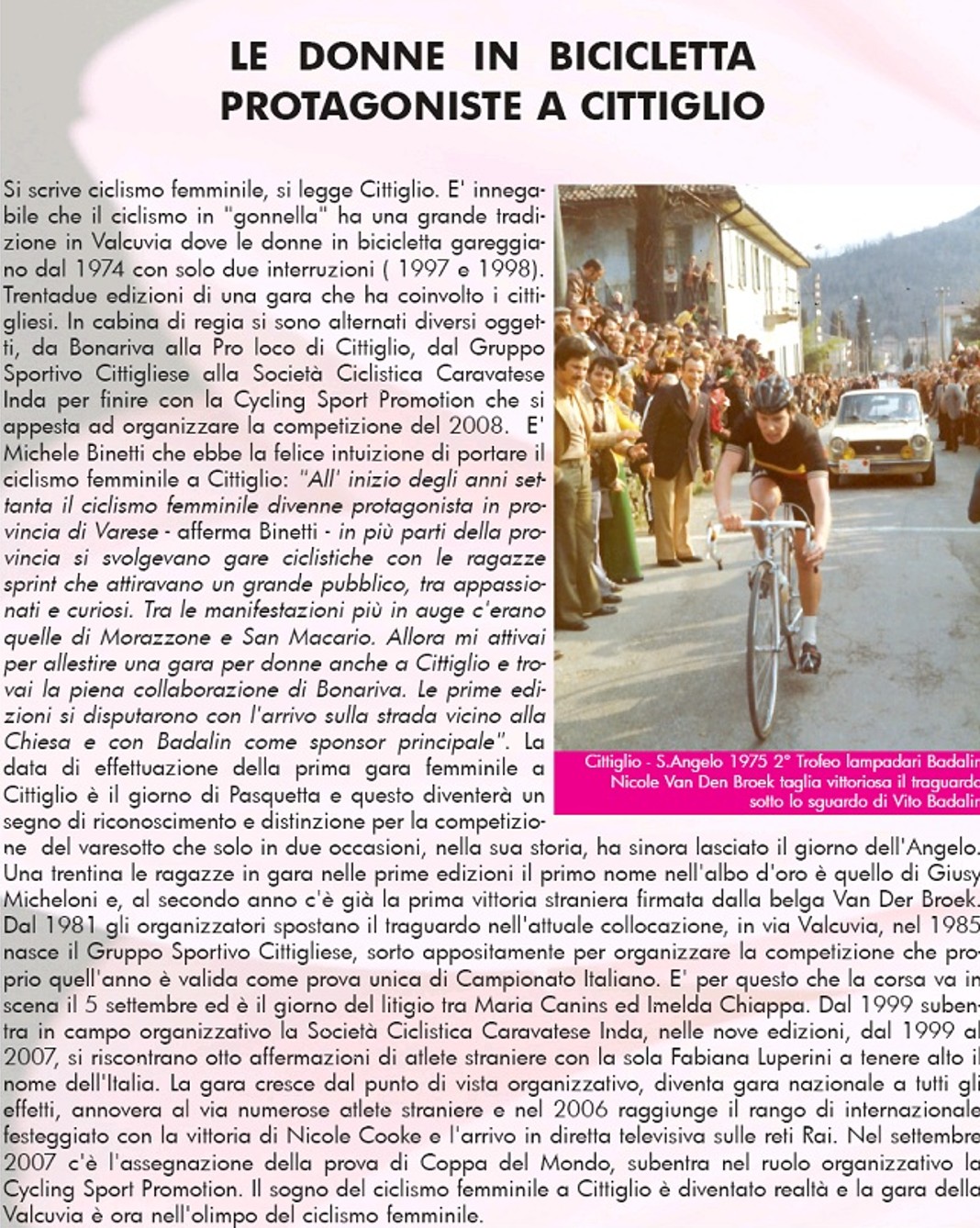
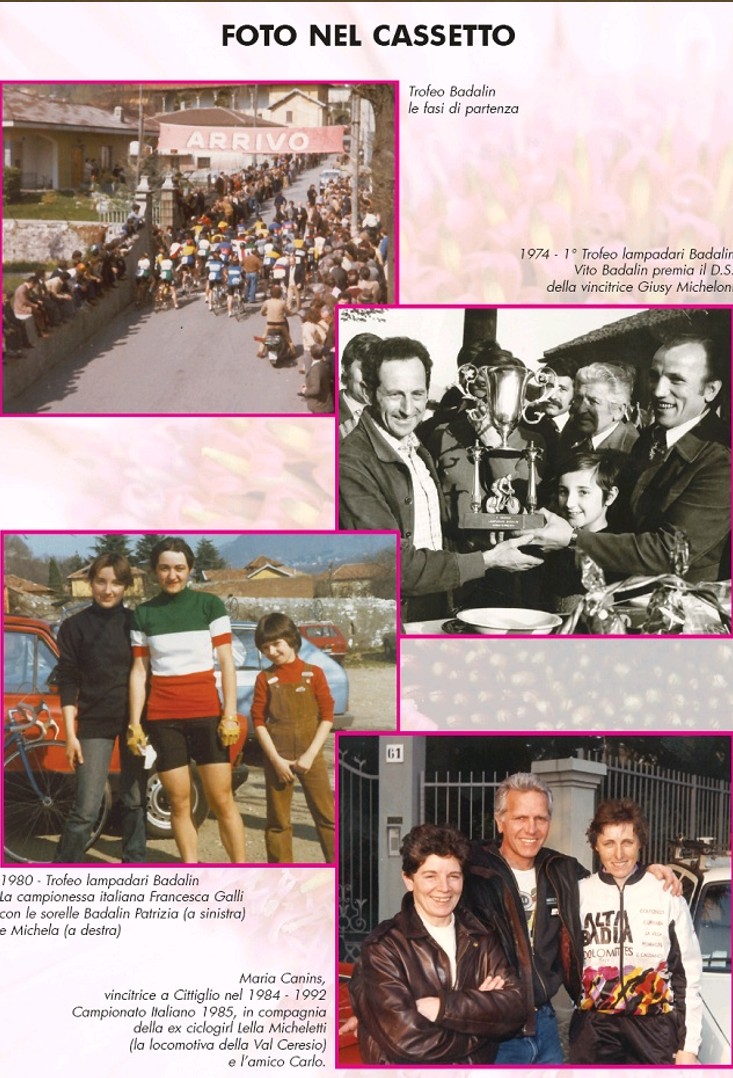
Cittiglio, pochi chilometri a nord di Varese, è un paese piccolo, eppure conosciuto perché ha dato i natali al più grande campione che l’Italia abbia regalato al ciclismo mondiale: Alfredo Binda. Nato nel 1902 e scomparso nel 1986, lanciato da un commerciante di biciclette italiano in Francia (a Nizza Binda collaborava con zio e fratello stuccatori), fu ingaggiato dalla Legnano del mitico Eberardo Pavesi per dodicimila lire di stipendio annuo. Debuttò ad alto livello nel Giro d’Italia del 1925, in teoria gregario, nei fatti libero di prendere iniziative: si dimostrò talmente ispirato da vincere la corsa rosa tra lo stupore dei tifosi. Fu l’abbrivio di una carriera ineguagliabile, fatta di 5 Giri come Coppi e Merckx (più uno… ad honorem: nel 1930 gli organizzatori lo pagarono per restare a casa), 3 titoli mondiali, 4 campionati italiani, 2 Milano-Sanremo, 41 tappe del Giro e 2 del Tour (purtroppo ne disputò uno solo, per motivi di sponsor), più mille altri trofei che stanno stretti in una bacheca pazzesca. Si ritirò nel ’36 dopo un rovinoso capitombolo alla Sanremo. A guerra finita divenne ct della nazionale, riuscendo a far coesistere due galli come Bartali e Coppi: portò in Italia quattro maglie gialle (Bartali, due volte Coppi, Nencini) e due iridate (Coppi e Baldini). Furono lui e Gianni Brera a introdurre nel mondo del pedale il concetto di ammiraglia. Un campione straordinario, amatissimo ovunque, America compresa: il suo mito spopolò nell’era pre-televisiva, figurarsi che icona sarebbe stato se si fosse giovato dei media odierni. Cittiglio ricorda “il Binda” con un museo dei cimeli che, situato nel centro del paese, e con la gara femminile a lui intitolata, che nel 2017 spegnerà la 42ª candelina. Quella in programma il prossimo 19 marzo sarà la 19ª edizione dalla rinascita del 1999, La sua storia, ricca di aneddoti e di grandi nomi, rende il Trofeo Binda una manifestazione unica nel panorama italiano e internazionale. Sono lontani gli esordi del 1974: in quell’anno la lecchese Giuseppina Micheloni, ottima atleta che fu azzurra e tricolore, inaugurò l’albo d’oro della corsa cittigliese, partita col modesto rango di prova regionale ma subito appetita dalle grandi firme del ciclismo femminile dell’epoca. Tra le vincitrici dei tempi pionieristici figura anche la formidabile Maria Canins; negli anni ’90 si imposero sul traguardo di via Valcuvia talenti come Fabiana Luperini e Valeria Cappellotto. La prima vita del Binda si chiuse nel ’96. Dopo due anni di stop, nel ’99 il comune di Cittiglio incaricò Mario Minervino di far risorgere la corsa. Detto fatto: divenne gara nazionale e poi internazionale, incoronando puntualmente fuoriclasse assolute e acquisendo un profilo di primo piano. Dal 2008, persa la Sanremo donne, l’Uci ha designato il Trofeo Binda come unica prova italiana di Coppa del Mondo, manifestazione inferiore solo a Olimpiadi e Mondiali per fascino e prestigio. È insomma la gara più importante del calendario italiano e si corre proprio sulle strade care ad Alfredo Binda, che quando non gareggiava in giro per il mondo soleva uscire in bici col fratello Albino, ingoiando chilometri sugli stessi saliscendi silvestri della Valcuvia che impegnano le campionesse di oggi. L’annuale festa del Trofeo Binda, che si è progressivamente sganciata dall’iniziale collocazione a Pasquetta per brillare di luce propria, è anche l’abbraccio di una terra che trasuda passione per le due ruote. Cittiglio e l’intero Varesotto partecipano con calore all’evento, il coinvolgimento delle scuole assicura la diffusione attraverso lo sport di messaggi educativi alle nuove generazioni. Sarà in classe World Tour Femminile l’edizione 2017, poi, avrà come sempre qualche novità con il 5° Trofeo Da Moreno – Piccolo Trofeo Binda, iscritta nel calendario UCI Donne Junior in classe Nations’ Cup e riservata alla categoria Donne Junior.Arrivo nella collaudata cornice del centro di Cittiglio, mentre sarà come sempre decisiva per la selezione definitiva la salita di Orino: un’erta che sta al Binda come il Cauberg all’Amstel, lo Jaizkibel a San Sebastian, il muro di Huy alla Freccia Vallone, il Grammont al Fiandre, il Ghisallo al Lombardia, il Mortirolo al Giro, l’Alpe d’Huez al Tour. Su questo tracciato non si può bleffare: prova ne sia che dal ’99 a oggi hanno trionfato cinque volte atlete che hanno vestito la maglia iridata (Ziliute, Cooke, Schleicher, Vos), un’olimpionica (la stessa Cooke), cinque vincitrici di Giro e/o Tour (Luperini, Cooke, Brändli, Pooley,Vos), quattro regine di Coppa del Mondo (Ziliute, Wood, Cooke, Vos). Le ultime quattro vincitrici Longo Borghini, Johansson, e per ben du volte Elizabeth Armistead Un albo d’oro sontuoso che attende un nuovo grande nome: la lunga marcia verso l’appuntamento del 19 marzo è già cominciata, con la certezza che sarà un’altra giornata memorabile.
Storia Trofeo Alfredo Binda (clicca sul link: http://www.trofeobinda.com/index.php?option=com_content&task=category§ionid=1&id=36&Itemid=143)
Alfredo Binda since 1902…
Cycling makes history in the small town of Cittiglio for over one hundred years
Cittiglio, a few miles north of Varese, is a small town; nevertheless it is well known because it gave birth to the greatest Italian champion in the cycling world: Alfredo Binda. He was born in 1902 and died in 1986, at the start of his career he was sponsored by an Italian bicycles dealer in France (in Nice Binda worked with his uncle and brother as a plasterer), he was then part of the legendary Legnano team led by a myth, Eberhard Pavesi. Binda’s annual salary was twelve thousand pounds. He debuted at a high level in the Giro d’Italia in 1925, as a domestique, but free to take initiative: he proved his talent by winning the pink race surprising all the fans. This was the start of an unbeatable career, 5 Giri d’Italia just like Coppi and Merckx (plus one …ad honorem: in 1930 the organizers paid him to stay home), 3 world titles, 4 Italian championships, 2 Milano-Sanremo, 41 stages at the Giro d’Italia and 2 stages of the Tour de France (unfortunately he only raced once in the Tour de France due to sponsorship reasons), plus thousands of other trophies that all just about fit in an unbelievable glass cabinet. He retired in 1936 after a disastrous fall during the Sanremo race. After the war, he became Italian team manager, looking after two “prima donna” like Bartali and Coppi: he brought to Italy four yellow jerseys (Bartali, twice, Coppi, Nencini) and two world championships (Coppi and Baldini). Together with Gianni Brera, he introduced the concept of the support car in the cycling world. An extraordinary champion, beloved everywhere, including America: his legend was great in the pre-television era, imagine how popular he would have been with the help of today’s media. Cittiglio dedicated to “il Binda” a museum of memorabilia, in the town centre, that has more than 30 thousand visitors per year and the women’s race that is celebrating its 40th anniversary in 2015. This is the 17th edition from the revival of 1999, the 8th as part of the World Cup circuit and it is scheduled to take place on the 29th March 2014. Its history, full of great stories and big names, makes the Trofeo Binda a unique event on National and International level. It all began in the far 1974: in that year Lecco Giuseppina Micheloni, excellent Italian athlete from Lecco, started the honors’ list of the Cittiglio race. Although it started as a regional test, it immediately involved the big names of women cycling. Among the winners of those pioneering times the incredible Maria Canins; in the 90’s talents such as Fabiana Luperini and Valeria Cappellotto won on the Via Valcuvia arrival. The first life cycle of the Binda Trophy ended in ’96. After two years of not racing, in ’99 the mayor of Cittiglio asked Mario Minervino to bring the race back to life. Said and done: the race became a national event and then an international event, duly crowning absolute champions and becoming a first class race. Since 2008, after the women’s Sanremo race was written off, the UCI designated the Binda Trophy as the only Italian test of the World Cup circuit, an event second only to the Olympics and World Championships as far as charm and prestige. In fact, it is the most important Italian race and it takes place on the roads of Alfredo Binda, who, when he wasn’t busy around the world, used to cycle with his brother Albino, swallowing kilometers on the same crazy up and downs of Valcuvia where today’s champions battle each others. The annual event of Trofeo Binda, which used to take place on Easter Monday and now just shines on its own date, celebrates a land full of passion for the two wheels. Cittiglio and the whole Varese province commit 100% to the event. The involvement of the many schools guarantees the spreading of educational messages to new generations through the sport.As usual, the 2015 edition will have something new. Departure from Laveno Mombello and arrival in the centre of Cittiglio, while the Orino hill will be once again decisive for the final selection: this steep hill is as characteristic to the Binda Trophy as the Cauberg hill is to the Amstel Trophy, as the Jaizkibel hill is to the San Sebastian race, as the Huy wall is to the Fleche Wallonne, as the Grammont to the Flanders Tour, as the Ghisallo to the Lombardy Tour, as the Mortirolo Hill to the Giro, as the Alpe d’Huez to the Tour de France. This race doesn’t allow any bluffing: since ’99 the race was won five times by athletes who have worn the World Champion rainbow jersey (Ziliute, Cooke, Schleicher, Vos), an Olympic Champion (the same Cooke), five winners of the Tour de France and/or Giro d’Italia (Luperini, Cooke, Brändli, Pooley, Vos), four star athletes of the World Cup Circuit (Ziliute, Wood, Cooke, Vos). The last two winners Longo Borghini, Johansson. The honours roll is waiting for the next great name: the long road up to the date of the 29th March has already begun. It will be another memorable day, for sure!
Story Trofeo Alfredo Binda (click link: http://www.trofeobinda.com/index.php?option=com_content&task=category§ionid=1&id=36&Itemid=143)